Brand website
Chuanshanshi: a clear home for ceramic work
An eight-language official website connects ceramic work, its maker, courses, and contact details in a consistent visitor experience.
Website planning, product decisions, and acceptance; collaborated with AI coding agents to deliver the site.
Static multilingual website, Cloudflare Pages, reusable content and page templates
Eight languages and five page types, totaling forty pages
2026-10-10
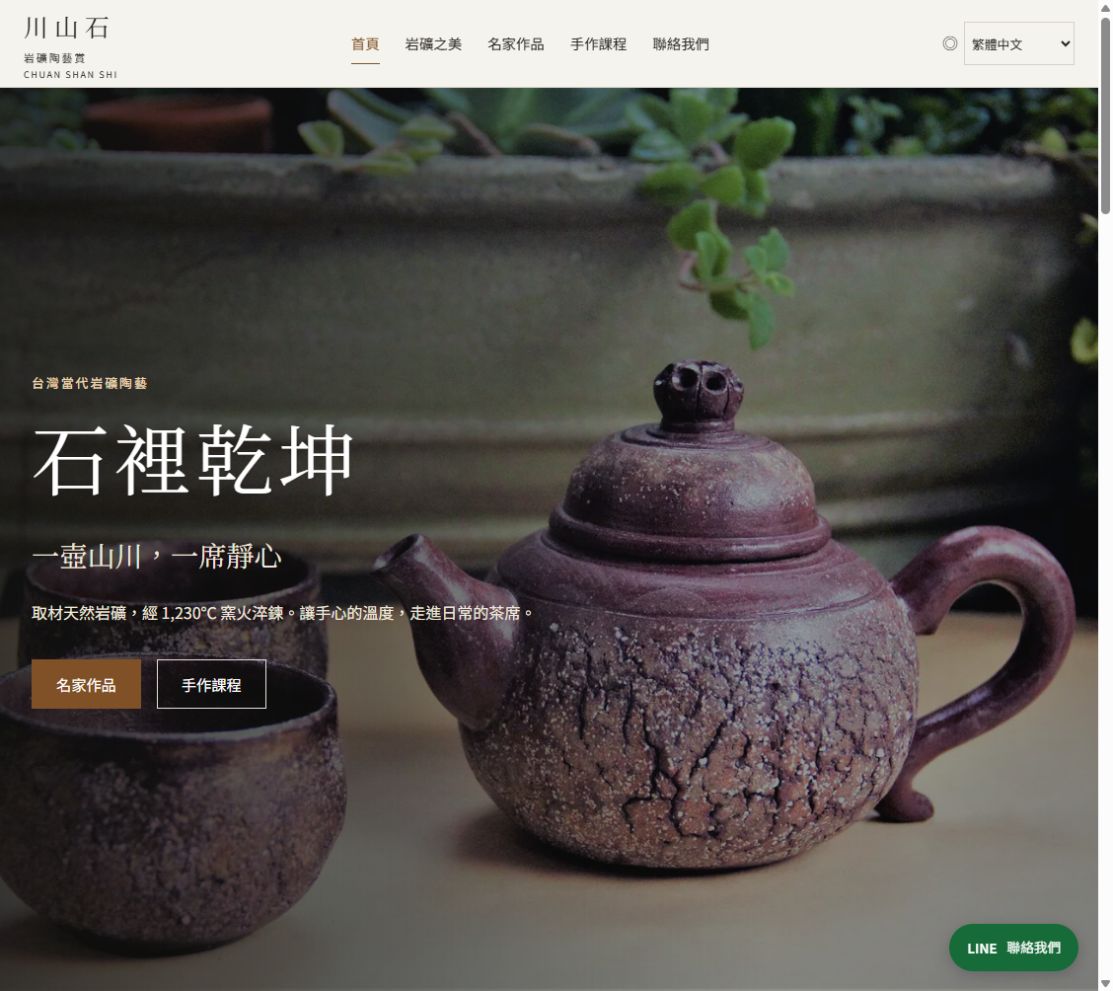
The starting point: connect the work with its context
A ceramic work invites someone to look more closely. A useful website also helps that person understand who made it, where to encounter it, and how to ask a question. My role in Chuanshanshi was to give those pieces of information a clear home.
I worked on website planning and product decisions. The ceramic work belongs to its maker. My contribution was to help present it thoughtfully and arrange the surrounding information so visitors in different languages could follow a consistent path.
The decisions: keep information consistent and contact direct
I organized the experience around artwork, the maker, courses, and contact. Reusable content and consistent templates support eight languages while keeping page structures comparable. That also gives future updates a clearer basis for checking whether information has drifted between pages.
For inquiries, the site points visitors to a real person through LINE. Where exhibition information needs a source, a link to the original Facebook post provides a way to check it. These choices connect the information on the site with the next interaction a visitor may need.
The implementation: make the release as complete as the pages
The released static website runs on Cloudflare Pages. Eight languages and five page types produce forty pages. Canonical URLs and a www 301 redirect keep the entry points consistent. Privacy preferences let visitors opt out of Web Analytics.
I set priorities, planned the website, and checked acceptance alongside AI coding agents. Multilingual delivery required more than translation: every page needed corresponding content and the right assets. The release process also had to confirm that the pages and assets being checked belonged to the version being published. That correspondence became an explicit part of the release checks.
The evidence: a shipped website and a repeatable check
The official eight-language, forty-page release was verified on October 8, 2026, and the site is publicly accessible. The homepage shown in this case comes from the live website. The supported outcome is the delivered site and its multilingual content; I do not have conversion-lift data to report.
The project strengthened my attention to the final part of delivery. A finished page still needs its content, URLs, and assets to reach visitors together. A repeatable acceptance process makes that handoff easier to check and gives future maintenance a dependable starting point.
Have a thought? Let’s talk.
Find me on Instagram to talk about this topic.
Talk with Kevin on Instagram →